





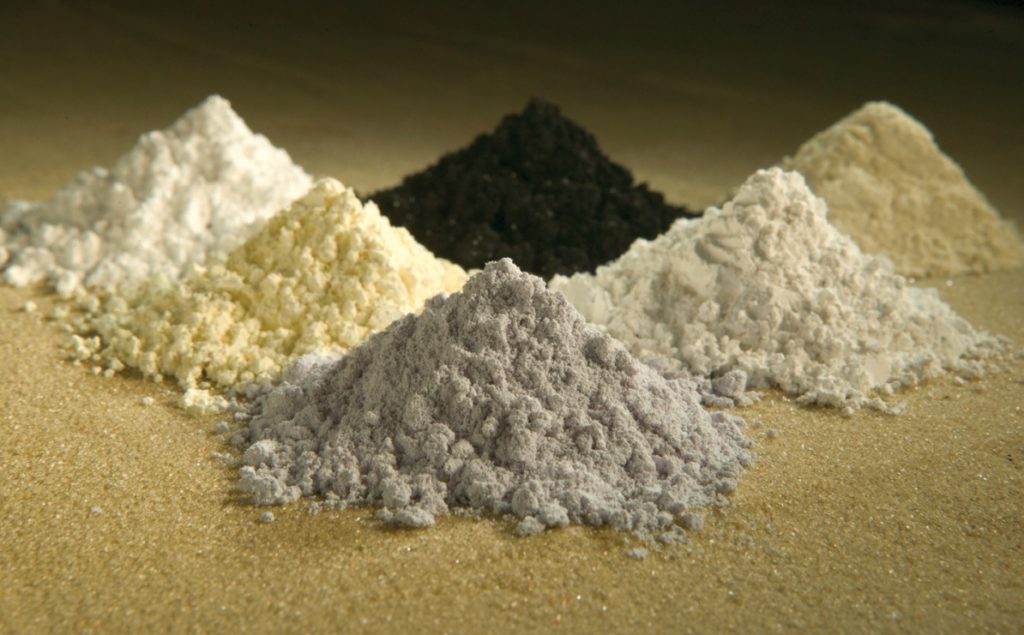
Vinnytsia region has significant reserves of rare earth metals, which, according to the Forbesare estimated at approximately $24 billion. Despite this, the region still remains away from active mining. Whether this is a loss for the economy or, on the contrary, an environmental advantage, explained PhD in Geography, Associate Professor and Head of the Department of Geography at the Kotsiubynskyi VDPU Vladimir Kanskoy in a comment for Public Vinnytsia.
Deposits and composition of subsoil in Vinnytsia region
Several promising fields have been identified in the region, including Zelenoyarskoye titanium-zirconiumThe field is located in Orativsky district. Although it is officially included in the geological maps, it is not currently being developed.
The region's mineral resources are dominated by titanium і zirconium - metals required for the production of medical implants, military prostheses and nuclear power. Also, according to Kansky, in Vinnytsia region there may be deposits of germanium, europium, neodymium and lithium.
"The likelihood of lithium being present is associated with the remains of the Sarmatian Sea. The salt deposits of Podillia may indicate the formation of its deposits," the scientist explained.
How rare earth metals are mined
Rare earth elements are not mined in their pure form - they are contained in minerals such as quartz, feldspar or mica. To produce them, the ore is crushed to a state of microparticles, after which it undergoes complex chemical treatment.
Out of 10 tonnes of raw materials, only 20-50 grams of valuable metal, so the process is extremely energy-intensive, expensive and hazardous to the environment.
Kanskoy emphasises that during grinding, ore particles can be released into the atmosphere and settle as "dirty rain", and the residues after processing are often toxic.
Where rare earth elements are used
These metals are the backbone of the modern technology industry - they are used in drones, wind turbines, electric motors, nuclear power, defence equipment, telecommunications and even artificial intelligence systems.
"Without them, neither modern military systems nor the IT industry would exist," Kanskii said.
Global context: US and Chinese competition
According to the expert, today rare earth metals have become one of the key elements of global technological confrontation between the US and China.
China began actively developing its own deposits in the 1950s and now controls most of the world's production. Even American companies often send ore to China for processing.
Ukraine, according to analysts, could become a new source of strategic raw materials for the West, helping to reduce dependence on Chinese resources.
Production in Ukraine: difficult, expensive, but strategically necessary
Exploration and development of rare earth metal deposits require significant financial and technological resources. For a long time, Ukraine has not invested in this area due to the high cost of geological work, although the potential of its subsoil is estimated at over $15 trillion.
About. 70% deposits of such metals are located in the East and South-East of Ukraine, in the areas where military operations are currently underway. The most important deposits are lithiumused in the production of batteries for electric vehicles and electronics.
Will Vinnytsia region benefit from the absence of mining?
Although Vinnytsia region's reserves are among the most modest in Ukraine, the expert believes that environmental benefits.
"Mining of such metals is accompanied by huge waste, soil and water pollution, and the formation of toxic tailings. This is harmful to both nature and human health," emphasises Kansky.
According to him, during the development of the fields the soil layer is destroyedand the use of large amounts of water can lead to disappearance of springs and wells, microclimate change and biodiversity loss.
Subsoil agreement: chance or risk
Commenting on the latest international agreements in the field of subsoil use, Kanskoy notes that Ukraine would have come to the need to develop these resources anyway. Cooperation with the United States can provide access to technology, joint financing, and advanced geological exploration.
However, it is possible that part of the information on Ukrainian reserves will remain classified for security reasons.
"This is not only a matter of economy, but also of national security. And it is not a given that local communities will agree to extraction if they realise that they may lose water or fertile land," Kanskii concluded.
Thus, "Silence of the subsoil" in Vinnytsia region may turn out to be a blessing - preserving nature, water and human health, even despite the lost economic potential.